Theosophy: Bridging Art, Science, Theology, and Philosophy

Updated: Jan 1
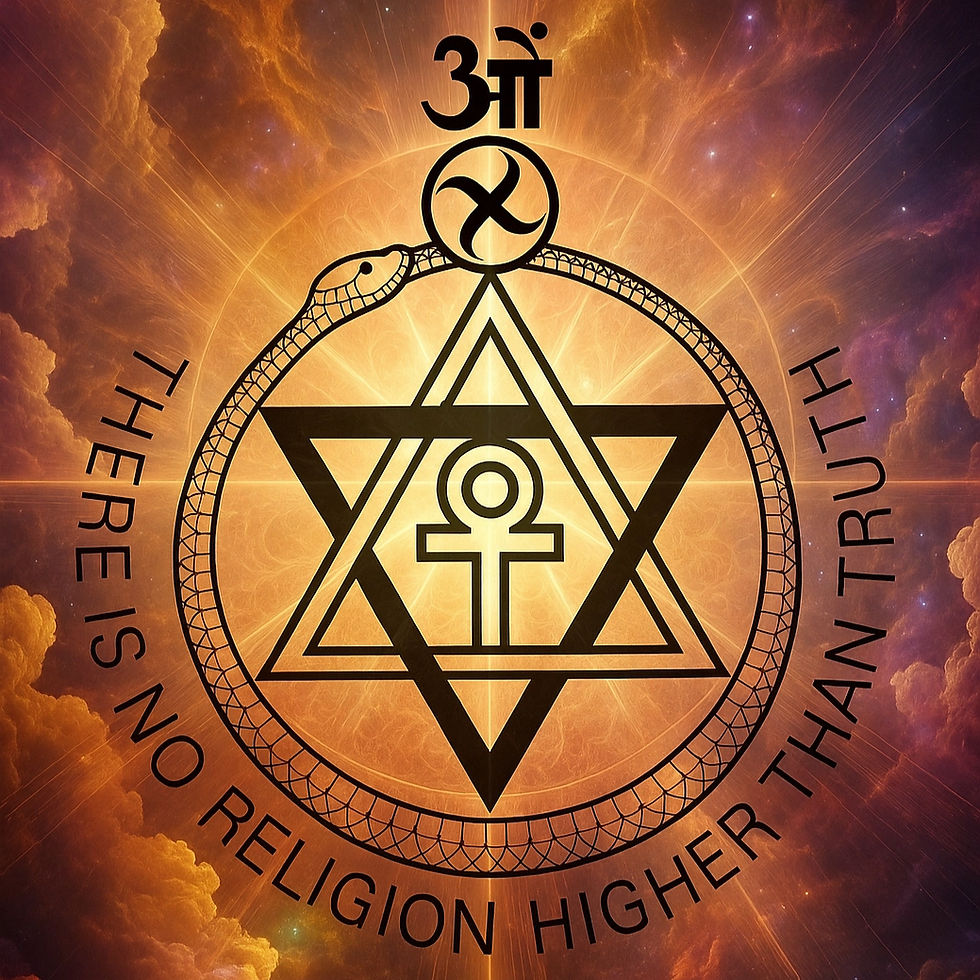
Theosophy, derived from the Greek words theos (divine) and sophia (wisdom), refers to a timeless spiritual philosophy that seeks to uncover the hidden truths behind all religions, sciences, and philosophies. While its roots go back to ancient mystical traditions, the modern Theosophical movement emerged in the 19th century under the leadership of Helena Petrovna Blavatsky and the Theosophical Society, aiming to reawaken humanity’s understanding of the spiritual laws that govern life.
The Foundations of Modern Theosophy
Founded in 1875, the Theosophical Society was built upon three key objectives:
Universal Brotherhood — the idea that all human beings are spiritually connected beyond distinctions of race, gender, or creed.
Comparative Study — encouraging open inquiry into religion, philosophy, and science without dogma.
Exploration of the Unexplained — investigating psychic phenomena and the latent powers of human consciousness.
Blavatsky’s works, including The Secret Doctrine (1888), introduced Western readers to Eastern spiritual ideas like karma, reincarnation, chakras, and cosmic evolution, while proposing a vast esoteric cosmology involving spiritual hierarchies, hidden masters, and multi-dimensional planes of existence.
Core Teachings
Theosophy teaches that:
All life is one — there is an underlying unity behind the apparent diversity of forms.
Human beings evolve spiritually through many lifetimes, driven by karma and inner growth.
Consciousness exists on multiple levels, from the material to the divine.
Truth is universal, and each religion expresses aspects of the same perennial wisdom.
These principles inspired movements ranging from New Age spirituality to alternative medicine, and influenced thinkers, artists, and cultural icons.
Theosophy’s Surprising Influence on Modern Culture
Though often overlooked in mainstream discussions, theosophy has left a lasting imprint on modern pop culture, music, literature, and spirituality—often in subtle or unexpected ways.
Harry Potter and the Magical World
J.K. Rowling has never claimed to be a theosophist, but the Harry Potter series is full of themes and symbols that closely mirror theosophical ideas:
The concept of the soul’s immortality and evolution—represented through characters like Harry, who undergo inner transformation and moral awakening.
The idea of unseen worlds and hidden dimensions—the magical realm existing parallel to the Muggle world echoes theosophy’s view of subtle planes of existence.
The emphasis on ethical growth, sacrifice, and love as higher laws—central theosophical principles.
The very structure of Hogwarts, with its emphasis on inner development and hidden wisdom, echoes the initiatory schools and esoteric traditions admired by theosophists. But one of the most intriguing connections between Harry Potter and theosophy lies in the character of Helena Ravenclaw, also known as the Grey Lady, the ghost of Ravenclaw House. While J.K. Rowling hasn’t explicitly confirmed the link, many literary scholars and esoteric enthusiasts have pointed out that Helena Ravenclaw’s name could be a subtle homage to Helena Petrovna Blavatsky, the founder of modern theosophy. Helena Ravenclaw is portrayed as mysterious, reclusive, and deeply tied to hidden knowledge—qualities often associated with Blavatsky herself. The character is also the keeper of a significant secret (the location of Rowena Ravenclaw’s diadem, which becomes a key to defeating Voldemort), reinforcing her role as a guardian of arcane wisdom—much like Blavatsky’s position as a transmitter of esoteric truths. Blavatsky also had a complex and somewhat indirect relationship with Freemasonry and its associated symbolism, including the Eastern Star. While she was not a Freemason herself, Blavatsky was deeply interested in secret societies, esoteric traditions, and ancient wisdom, many of which influenced or overlapped with Masonic teachings. The Eastern Star, a five-pointed star symbol used prominently in certain Masonic-affiliated organizations—most notably the Order of the Eastern Star—is rich in symbolic meaning related to virtues and spiritual enlightenment.
Comparison: The Eastern Star & Hogwarts House colours.
Blue (Wisdom) clearly connects to Ravenclaw's blue.
Red (Love/Courage) aligns with Gryffindor’s red.
Yellow (Hope/Justice) links to Hufflepuff’s yellow.
Green (Faith/Growth) matches Slytherin’s green.
White (Purity) doesn’t have a direct house equivalent but symbolizes a universal virtue.
Elvis Presley: Theosophy and the King
Elvis Presley, the "King of Rock and Roll," was deeply interested in spiritual teachings, including theosophy, Yoga, and Eastern mysticism. He was known to carry Blavatsky’s The Voice of the Silence and other esoteric texts on tour and often discussed reincarnation, karma, and spiritual evolution with close friends.
In his personal library were books on metaphysics, Kabbalah, and ancient wisdom traditions. Elvis reportedly believed he had lived past lives and spoke of feeling a deep mission to uplift people through his music—a sentiment deeply aligned with theosophical teachings on service and spiritual destiny.
Writers, Artists, and Thinkers
Other major cultural figures influenced by theosophy include:
W.B. Yeats – The Irish poet was a member of the Theosophical Society and infused his poetry with esoteric symbolism.
Kandinsky and Mondrian – Pioneers of abstract art, both drew on theosophical ideas of inner reality and spiritual geometry.
L. Frank Baum – Author of The Wonderful Wizard of Oz, Baum was a known theosophist, and his story can be interpreted as an allegory of spiritual awakening.
The New Age Movement
Much of what we now consider “New Age” spirituality—including concepts like chakra healing, past life regression, ascended masters, and spiritual evolution—can be traced directly to theosophical sources. Even today, books by Blavatsky, Annie Besant, and Charles Leadbeater are referenced in metaphysical and holistic communities.
Why Theosophy Still Matters Today
In a world fractured by political division, ecological crisis, and spiritual disillusionment, theosophy offers an integrative vision that emphasizes:
Unity over division
Inquiry over dogma
Inner transformation over outer conformity
Its teachings call us to recognize the sacredness of all life, to take responsibility for our spiritual growth, and to see every challenge as part of a larger evolutionary process. Whether or not one accepts its metaphysical claims, theosophy’s core values—compassion, understanding, and the search for truth—are more relevant than ever.
The 10 Pillars of Theosophy
Universal principles for the seeker of truth, wisdom, and inner evolution
Theosophy isn’t a religion — it’s a philosophy of spiritual awakening. Its teachings suggest that humanity is one family with earth, consciousness evolves across lifetimes, and behind the outer world lies a hidden spiritual architecture. These “commandments” are not literal laws but guiding ideals extracted from Theosophical thought, especially the writings of Helena Blavatsky, the Mahatmas, and the esoteric traditions they referenced.
They serve as a roadmap for the soul’s journey toward wisdom.
1. Seek Truth Above All Opinions
Theosophy teaches that truth is not owned by any religion, sect, or teacher. You must investigate reality through study, intuition, and direct experience. Belief means nothing without understanding. Truth is earned, not inherited.
2. Honor the Unity of All Life
Everything — human, animal, planetary, cosmic — is interconnected. There is one Life, one Consciousness, manifesting through many forms. To harm another is to harm yourself; to uplift another is to uplift the whole.
3. Recognize the Divinity Within
The divine isn’t distant — it is the core of your being. Theosophy calls this your “Higher Self,” an immortal spark of the universal spirit. Your purpose is to reunite with it through purity, wisdom, and inner discipline.
4. Serve Humanity Without Expectation
Selfless service accelerates spiritual evolution more than meditation or ritual. Help others simply because they are part of you. Service is the highest form of worship.
5. Align Your Life With the Law of Karma
Every thought, emotion, and action shapes your future. Karma isn’t punishment — it is education. Live consciously, responsibly, and compassionately, knowing you are always sowing seeds.
6. Embrace the Journey of Reincarnation
The soul grows through countless lifetimes. Your challenges are not random — they are lessons chosen for growth. View your life as a chapter in a far greater story.
7. Purify Your Mind, Speech, and Motives
Theosophy teaches that the inner plane is as real as the outer world. Impure motives distort perception; pure motives unlock higher insight. Speak truthfully, think clearly, and act with integrity.
8. Study the Wisdom of All Traditions
Theosophy draws from Hinduism, Buddhism, Neoplatonism, Kabbalah, Hermeticism, and more. Every religion holds a piece of the Great Mystery. Study broadly to awaken universal understanding, not sectarian belief.
9. Practice Meditation and Inner Stillness
Real spiritual knowledge is born in silence. Meditation aligns the lower personality with the Higher Self, opening the gates to intuition, insight, and inner guidance. Stillness is the doorway to the hidden worlds.
10. Walk the Path of Self-Transformation
Theosophy is not intellectual theory — it is a way of becoming. Refine your character, cultivate compassion, and strive toward wisdom daily. The true occult path is the transformation of consciousness.
Conclusion
Theosophy is not just a relic of esoteric history—it’s a living philosophy that continues to influence art, culture, and spirituality. From Harry Potter to Elvis, from abstract art to yoga studios, theosophy’s legacy is woven into the fabric of modern life. As more people seek meaning beyond materialism, this “wisdom of the ages” invites a deeper exploration of who we are, where we’ve come from, and where we’re going as a human race.


Comments